
Find Kahului Residents by Records
Begin with the fact already known. A street address belongs in the Maui Real Property Tax search, where the location can lead to an owner name and Tax Map Key, or TMK. A name belongs in the property owner search, Hawaiʻi Judiciary party search, and official business or license indexes. A date from decades ago belongs at Kahului Public Library, the Hawaiʻi State Archives, or the Maui Historical Society. These sources overlap, but they do not mean the same thing. An owner may live elsewhere, a voter status is limited by law, and a court party may only share a name with the person sought.
A careful Kahului Residents Directory search preserves the spelling, date, and source of each result. Compare at least two independent records before tying a person to an address. Renters, relatives, and other household members may never appear in a parcel file.
- Search the County property roll by address, owner, or TMK. Note whether an address is the parcel location or an owner mailing address.
- Use the official voter status tool only for your own registration check. Public voter fields follow separate rules.
- Move an owner name or TMK into the statewide deed index to find instruments and prior title parties.
- For an older resident, search Polk directories, telephone books, Maui News indexes, probate indexes, and cemetery sources.
- When a known record is missing online, ask its custodian or submit a focused UIPA request.
Who Keeps Kahului Resident Records
Kahului is a census-designated place, not an incorporated city with its own clerk or recorder. County offices keep property, permit, GIS, and election material. State agencies keep deeds, court cases, vital records, business filings, and professional licenses. This split matters: the County Clerk does not issue birth certificates or record deeds. For block-by-block property work, use the Kahului street directory.
Maui Real Property Assessment
110 Alaihi Street, Suite 110
Kahului, HI 96732
808-270-7722
Maui County Elections Division
200 S High Street, Room 708
Wailuku, HI 96793
808-270-7749
Search Kahului Parcels and Owners
The Maui Real Property Tax website is the strongest start for an address. County guidance documents searches by location address, TMK, owner name, map, sales search, and sales list. Results can include the situs address, meaning the parcel’s physical location, and an owner mailing address. Those fields are not interchangeable. Assessment files also show values, classifications, exemptions, and links to sales or permits, but not a full household.
| Search key | Kahului use | Limit |
|---|---|---|
| Location address | Find parcel and TMK | Unit spelling affects results |
| Owner name | Find parcels by party | Ownership is not occupancy |
| TMK | Join maps, permits, and deeds | Preserve every digit |
| Map and sales | Compare parcels and transfers | Data may lag a deed |
The live qPublic form was blocked during research, so exact controls are not promised. County public extracts and its FAQ provide fallback access.
The official property screen shows where the search begins.
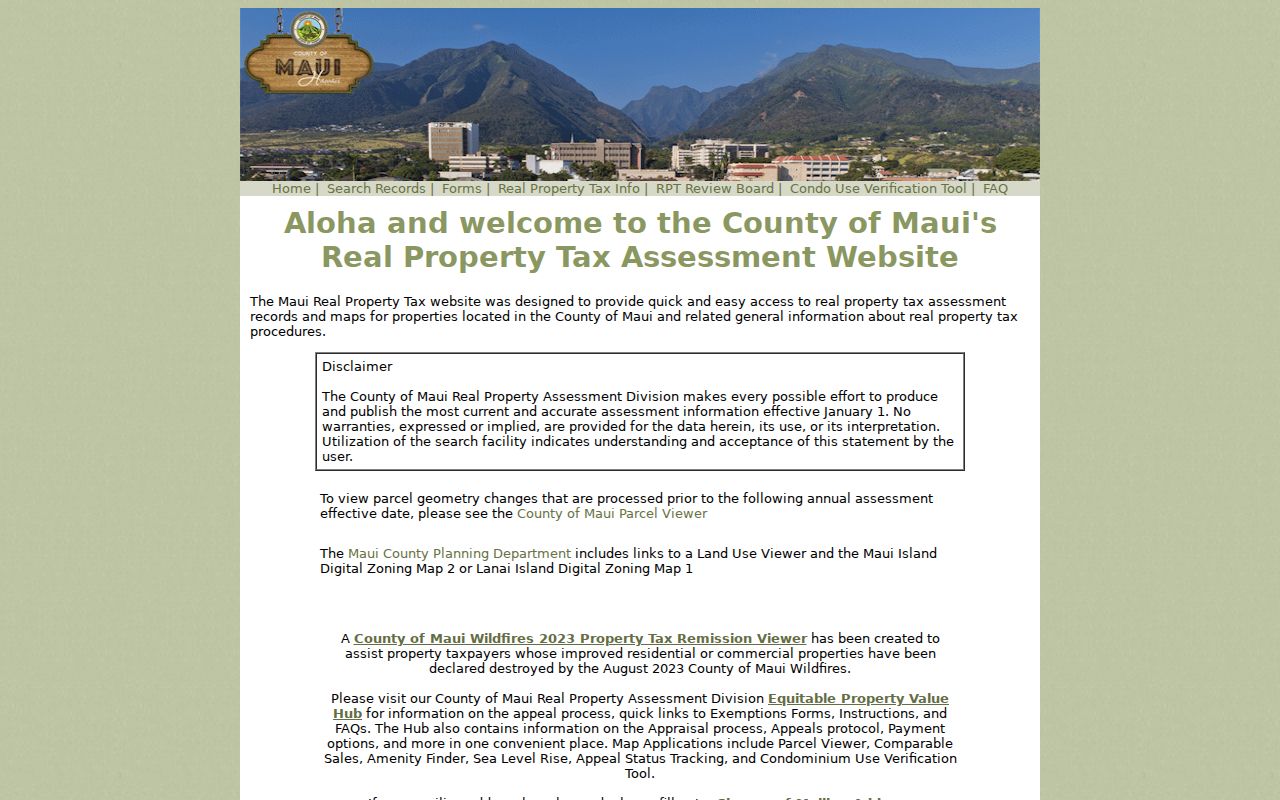
Treat its result as a dated ownership clue, then compare a recorded deed.
Connect Kahului Permits by TMK
The Maui Public Documents Search links a TMK to parcel information, issued permits and plans, subdivisions, planning files, civil as-builts, field books, ownership-history books, and map folders. MAPPS material begins with the County’s April 18, 2022 launch, while online field and ownership books reach to 1987. The County warns that recent or historic items may be absent. A blank result is a reason to call the responsible department, not proof that no file exists.
The captured menu shows this range.
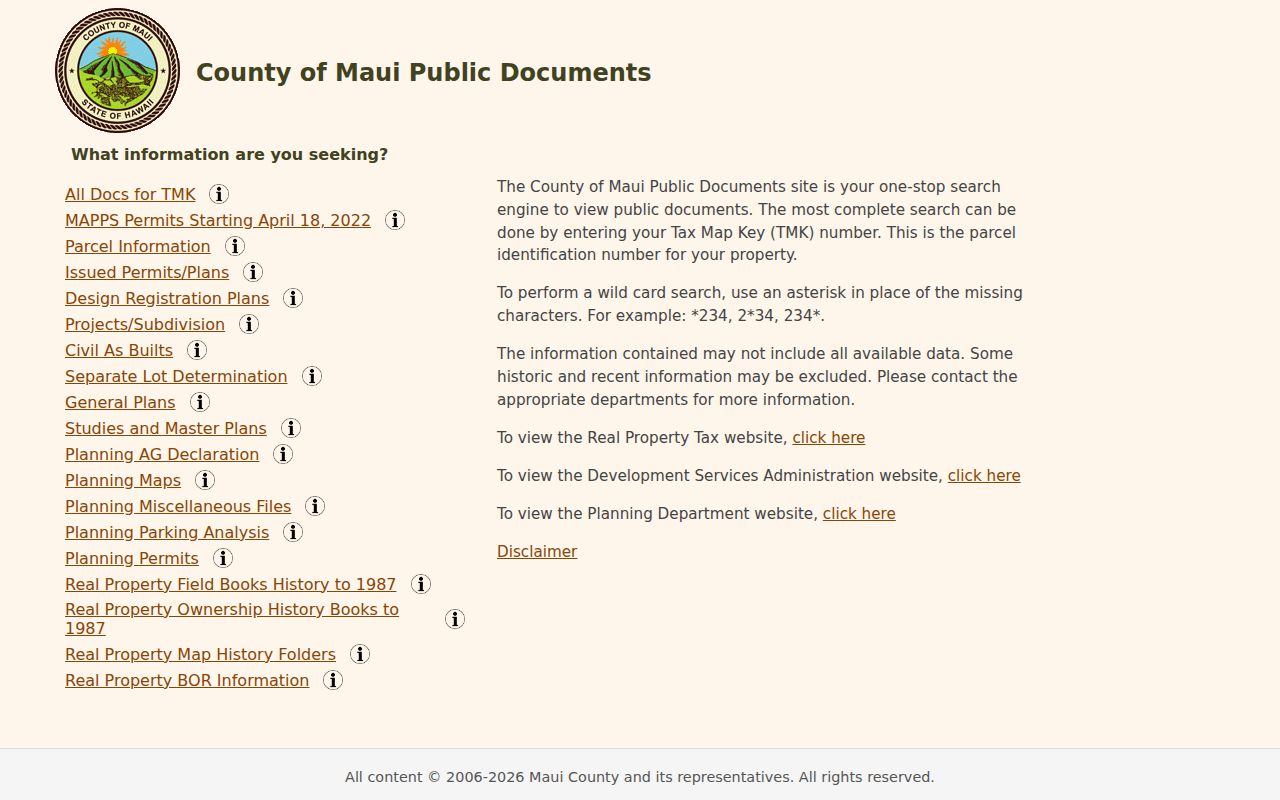
Save the TMK, category, dates, and error before seeking an omitted file.
Current Kahului Directory Sources
No current source is a full roll of Kahului residents. Official indexes list people in defined roles. The property roll names owners. Deeds name parties to land documents. Court search names parties in public cases. Business and license files connect people with entities or regulated work. A role, filing, or mailing address is an association, not proof that a person lives there now.
| Source | Who It Lists | Keeper | Access |
|---|---|---|---|
| Maui property roll | Owners and mailing contacts | County RPA | Search and extracts |
| Voter status and file | Voters within legal limits | Maui Elections | Self-check or approved request |
| BOC index | Land-document parties | State BOC | Account and paid images |
| eCourt Kōkua | Parties in public cases | Judiciary | Online or counter |
| Resource directory | Organizations and contacts | Maui County | Free category search |
Choose a roll by the relationship that needs proof. To resolve one name across sources, follow the Kahului resident lookup. Commercial directory products may be quick, but entries can be merged, stale, or unsourced. Official rolls are narrower, yet identify a custodian and date.
For court connections, Hawaiʻi Judiciary’s eCourt Kōkua searches public cases by individual name, business name, vehicle information, case ID, or filing date, depending on the case type. Second Circuit matters serve Maui County. The result list can show a party role, case number, court, case type, filing date, and status, while the docket lists events and available documents. Older files or images outside an online cutoff may still be reviewed through the Legal Documents Branch at Hoapili Hale. Name-only hits need another identifier because a docket does not prove that the party is the Kahului resident sought.
Vital records take a different path. Hawaiʻi Department of Health certificates require identity, payment, and a direct and tangible interest under HRS §338-18. Birth, death, marriage, and civil-union requests can use the agency’s documented online, mail, or in-person channels. As of February 1, 2026, divorce records moved out of Health’s custody and must be requested from the Judiciary. Genealogy access applies to qualifying events more than 115 years old, but that rule should not be turned into a broad claim that ordinary modern certificates are open to anyone.
Kahului Voter Records Stay Narrow
HRS §11-97 makes full name, district or precinct, and voter status public. Other affidavit details stay confidential except for election or government purposes. The Online Voter Registration System is a personal status tool requiring Hawaiʻi identification and the last four digits of a Social Security number. It is not a public street directory.
Maui County’s voter-data affidavit requires a qualifying purpose and lists a $100 County CD charge plus postage. Never enter another person’s protected identifiers.
Lawful use. Use public records for lawful personal, family, estate, or civic research, never to stalk, harass, or expose a protected address.
Trace Kahului Names Through Deeds
Hawaiʻi records land statewide through the Bureau of Conveyances. Its online index covers 1976 forward and searches names, document numbers, TMKs, TCTs, ranges, and dates. A grantor transfers an interest; a grantee receives one. Copy the full reference before ordering an image.
BOC records date to 1845, but older work uses its Honolulu reference room or a written request. Images are watermarked until purchase. BOC does not perform broad genealogy searches, so supply a name, date, type, or prior reference.
- Index
- A finding list pointing to a full document.
- Parcel
- Land identified in Maui records by a TMK.
- Criss-cross directory
- A directory arranged by address or phone.
- Roll
- An official list created for one purpose.
Request Missing Kahului Records
The Uniform Information Practices Act (Modified), HRS Chapter 92F, opens government records unless an exception applies. Ask for an existing file, not a newly made resident list. Identify the custodian, record type, TMK or case number, dates, and format. Maui routes requests through MauiGovQA. OIP guidance normally calls for notice within 10 business days, with clarification, prepayment, or extensions in some cases.
The request portal shows its tracking route.
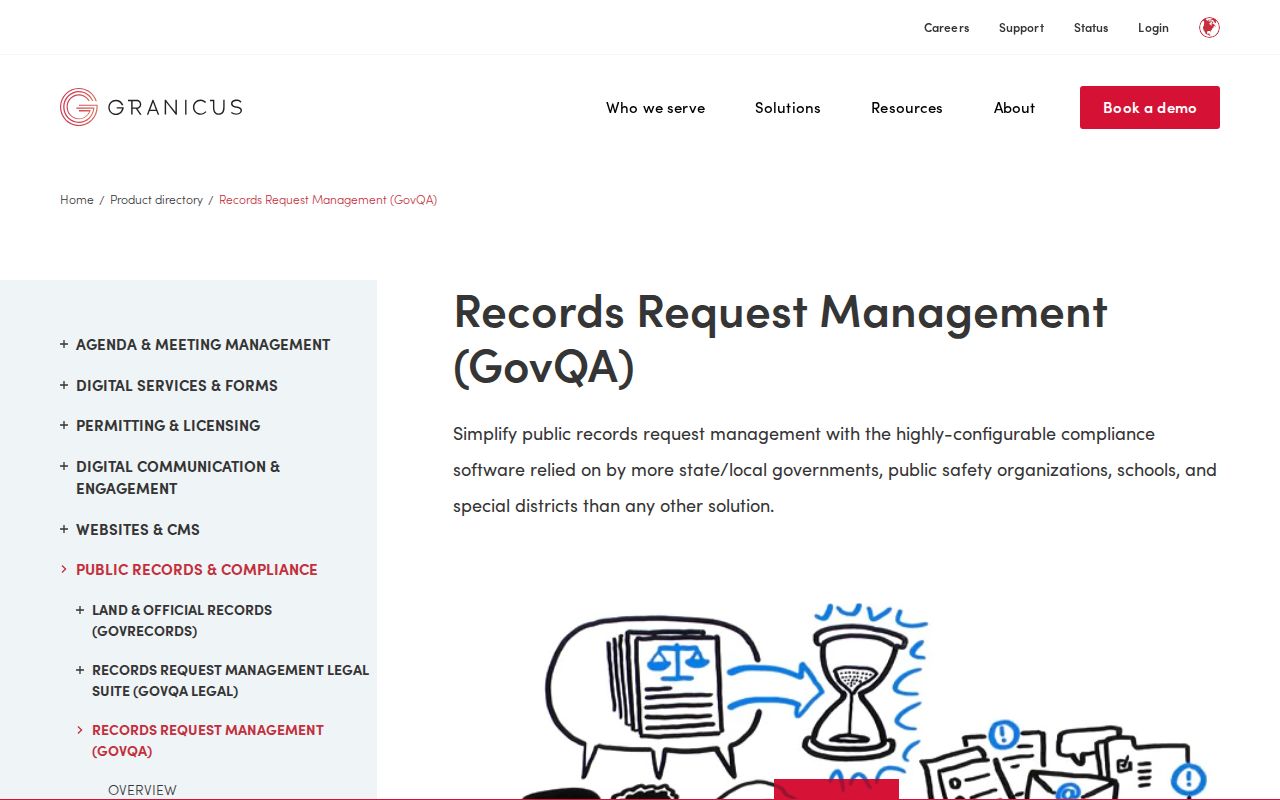
Save the request and response to make later work reproducible.
Kahului Has No City Clerk
The Maui County Clerk page routes land files to BOC, court files to the Judiciary, vital records to Health, and voter matters to Elections. County administration and the Second Circuit courthouse sit in Wailuku, while RPA and permit offices also operate in Kahului.
This geography changes how a Kahului Residents Directory search should be logged. Use “Kahului” for the census-designated place or postal label only when the source does. Keep “Maui County” for County property, permit, GIS, and election records, and keep “State of Hawaiʻi” for deeds, court systems, vital records, and business filings. The office address may be in Wailuku or Honolulu even when the indexed parcel or person has a Kahului connection.
The captured page helps prevent a misdirected request.
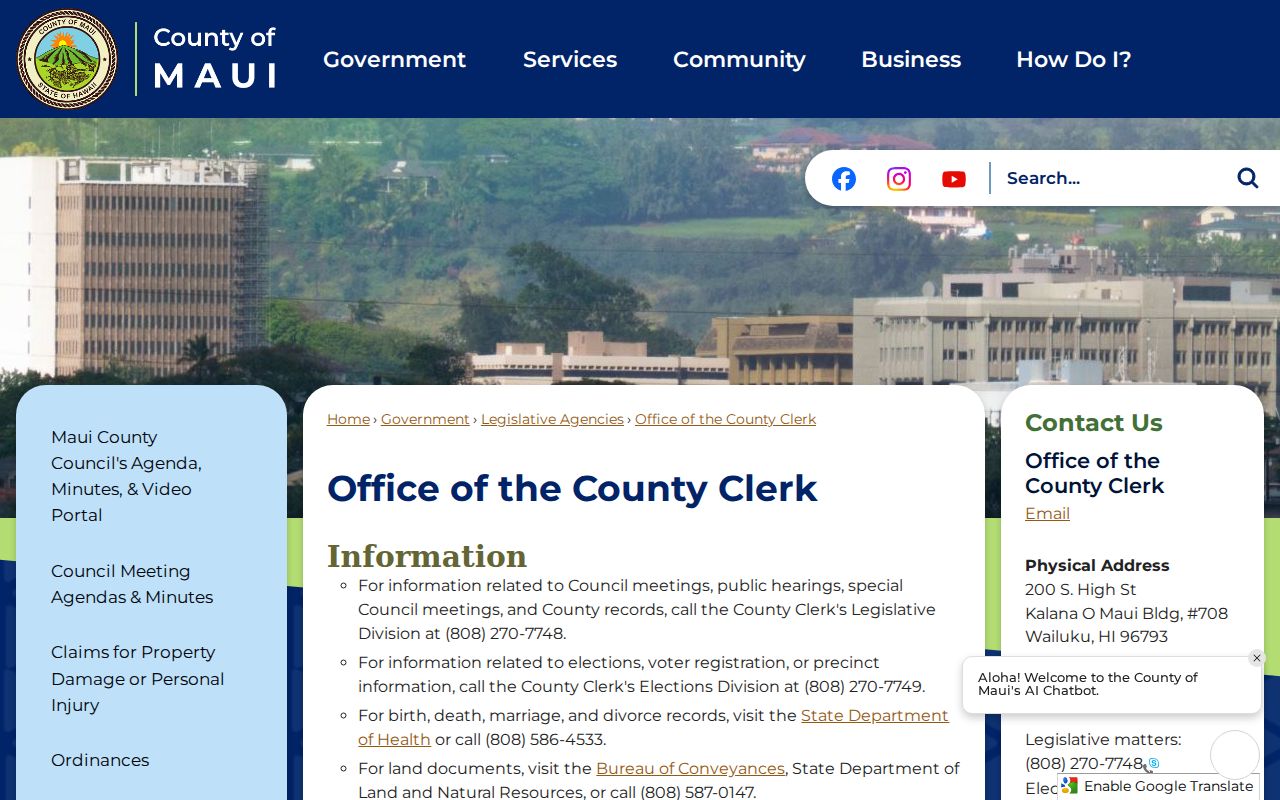
No one counter can certify a complete Kahului resident list. When an online route fails, call the office before filing a formal request. RPA can explain a TMK or tax-map route, permit staff can locate legacy material, the Second Circuit counter can address an older docket, and the library reference desk can check a physical collection. BOC accepts written requests for pre-1976 documents. Maui Historical Society schedules archive research by appointment. Each fallback is narrower and more useful than asking a clerk to search for every record about a person.
Check Kahului Business Connections
The DCCA Business Check routes entity, professional-license, complaint, tax, and discipline searches. Entity filings can name officers, managers, or agents. A license search can confirm status. Neither proves that a filed address is a home, but each can separate people with similar names.
Hawaiʻi Business Express transitioned to a newer portal in July 2026, so preserve the page date and entity number when saving a result. Search an exact organization name first, then try a distinctive word if punctuation or a designator blocks the match. Filed officer and agent fields show the role reported on that filing. Purchased documents may show a longer timeline, but a later filing can replace an earlier contact. Professional and Vocational Licensing covers many regulated programs through its public status search. A shared name still needs a license number or other match.
The captured landing page places official tools together.

Keep the entity or license number with the name.
Browse Kahului Community Listings
The Maui County Resource Directory filters by category, name, city, and state. It lists organizations, not neighbors. The Maui Chamber company map is another organization discovery tool. Confirm current status with the group before relying on an entry.
The County screen shows its filters.
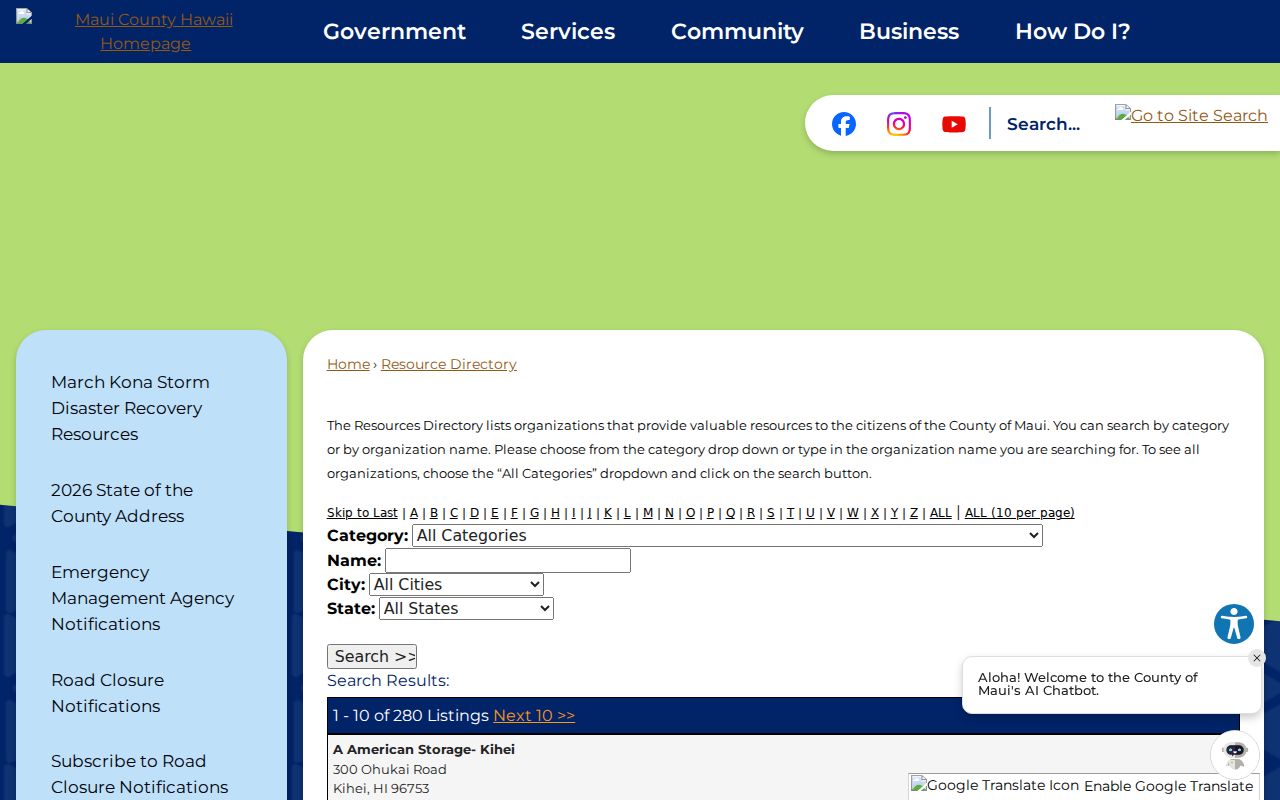
Use it to identify a contact before checking a filing or permit.
The chamber map appears in the second capture.
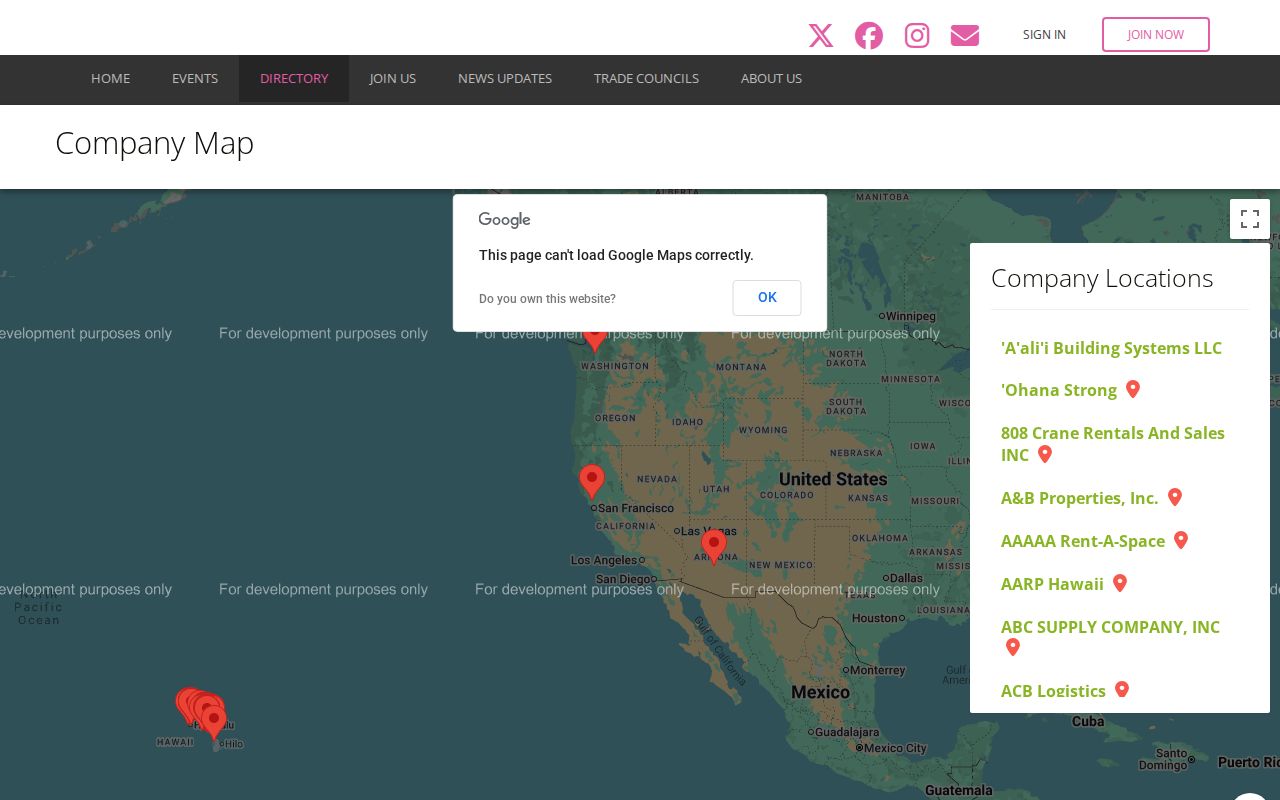
It is not evidence of an individual residence.
Historical Kahului Residents Directory
The statewide library bibliography identifies Polk’s City Directory of the Islands of Hawaii, Maui and Kauai on microfiche from 1954 through 1987. A Library of Congress scan preserves a 1958–1963 Wailuku telephone directory page. These are dated entries, not current proof. Search initials, married names, spelling variants, and nearby labels such as Wailuku or Puunene.
Kahului Public Library offers newspapers, reference help, and licensed genealogy tools. Maui News resources include print from 1900, online text from 2004, part of 1900–1922 through Chronicling America, and a 1900–1973 index. Full shelf details belong in the Kahului city directory.
Kahului Railroad Records Have Gaps
A 1946 tidal wave destroyed much of the Kahului Railroad archive. A person or address tied to the harbor and rail corridor may therefore require the 1914, 1927, and 1945 Sanborn references, harbor reports, Maui News notices, directories, deeds, tax maps, and probate files. The gap is not permission to infer a household from industrial history.
Kahului’s Dream City planning period from 1947 through 1963 and the library’s 1963 opening offer other date anchors. Preserve the street and locality spelling printed in each source. Changed labels can explain why an old directory line fails in a modern parcel search.
The Hawaiʻi State Archives adds online indexes for marriage, divorce, naturalization, probate, and wills, backed by a reference-room route when an image is not online. Maui Historical Society holds photographs, maps, genealogy files, County records, ledgers, and business collections. Its research process requires an appointment or archival request, and the research notes list a $25 initial fee and $75 research-service fee. FamilySearch collection descriptions can bridge Maui deeds, grantor indexes, tax material, and probate records, though access to an image may depend on an account or an affiliate library.
Dates must stay attached to every historical claim. The 2025 reopening of Kahului Public Library says the branch was available again; it does not establish that every directory volume is on an open shelf. Likewise, a modern County page can link an ownership-history book ending in 1987 without making the book current. When a source is offline, call the library desk, request an archive appointment, visit the BOC reference room, or send a precise written question instead of treating a web failure as a records gap.
Note: A missing hit may reflect an archive loss, portal cutoff, spelling change, or unscanned file rather than a missing resident.
Protect Kahului Address Privacy
Hawaiʻi’s Address Confidentiality Program gives qualifying survivors of domestic abuse, sexual offenses, or stalking a substitute address and mail-forwarding route under HRS Chapter 801G. A substitute address is a safety measure. Do not try to connect it to an actual location by combining parcel, voter, court, or directory clues. Stop the address trail and use the official program channel if a record appears to expose protected information.
Other records have their own boundaries. Courts block sensitive identifiers and withhold sealed or juvenile material. Vital certificates require legal eligibility. Voter affidavits protect most personal fields. When an official record is wrong, HRS §92F-24 provides a correction framework for personal records held by an agency. Ask the custodian to correct or redact the specific field. Keep only the least data needed, note the date, and never copy Social Security or full identification numbers into a research file.